Scope
Count endpoints, identify MDF/IDF and room locations, review ceiling/pathway access and assign firestopping or trade responsibilities.

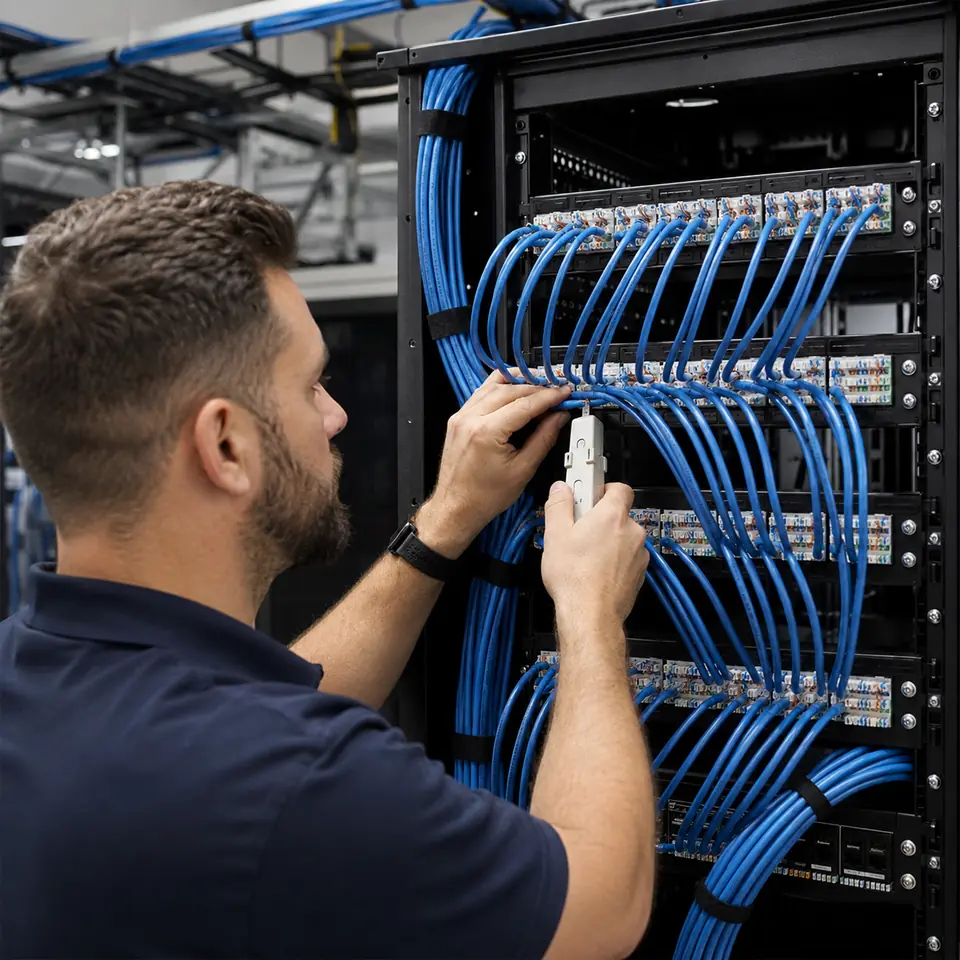
Cat6A and structured copper pathways, tested terminations, labeled ports and organized racks—built for 10G-ready connectivity and easier lifecycle support.
Pathways, Cat6A performance, terminations, racks, labels and test results become the physical operating system for everything connected above them. Building that layer correctly protects network performance and future change.
Cable category, pathway conditions, distance, fire separations, outlet density, rack space, labeling and acceptance requirements determine the real installation scope.
New construction, renovations, office changes, telecom-room cleanup and device expansion benefit from consistent pathways, terminations and records.
A cabling proposal should define what is installed, how every link is identified and what test evidence closes the approved work.
Count endpoints, identify MDF/IDF and room locations, review ceiling/pathway access and assign firestopping or trade responsibilities.
Confirm Cat6/Cat6A, distance, support method, patch panels, outlet hardware, labels and agreed test requirement.
Install supported routes, terminate and dress both ends, manage bend/fill conditions and label each approved link.
Test to the agreed continuity or performance method and separate accepted links from failures or blocked routes.
The handoff should connect each outlet to its rack position and test status so moves, additions and troubleshooting start with reliable records.
Confirm continuity or agreed performance for every completed link.
Match faceplate, cable and patch-panel identifiers at both ends.
Provide the included port schedule and test-result files when specified.
Identify damaged existing media, blocked pathways or links that did not meet acceptance.
Send floor plans or photos, approximate drop counts, rack locations, cable category, construction phase, access constraints and testing requirements.
Structured cabling is the physical foundation for networked systems, and its value depends on pathway discipline, identification and measurable link acceptance.