Scope
Identify affected carriers, priority rooms and representative indoor/outdoor signal conditions.

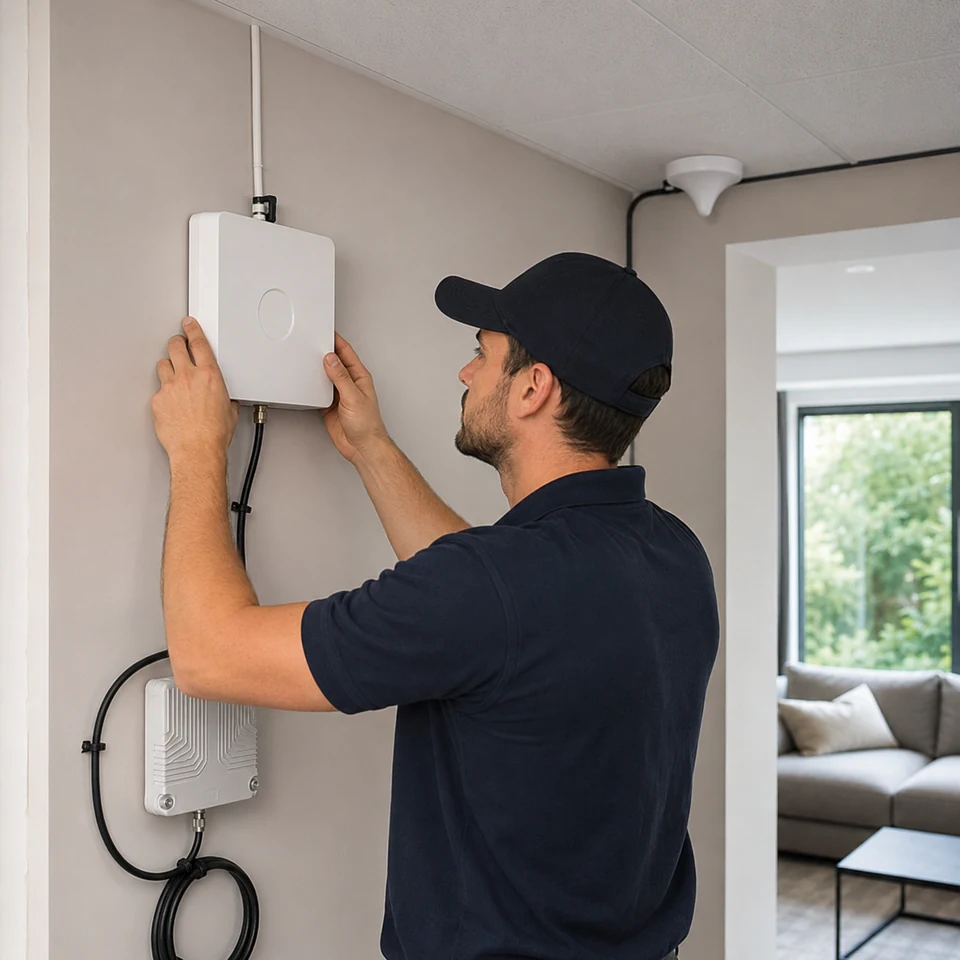
Cellular coverage-improvement systems installed around donor antennas, booster equipment, indoor distribution and clean cable routes.
Signal booster systems rely on outdoor signal capture, clean cable paths, correct indoor antenna placement and realistic expectations for coverage zones and carrier conditions.
Usable outdoor signal, carrier bands, building materials, cable loss, donor/server antenna separation and target indoor zones determine whether a booster plan is practical.
Coverage note: Final improvement depends on usable outdoor signal, carrier/band compatibility, building materials and antenna isolation. FOXAI verifies the installed result on site but does not promise guaranteed coverage where site conditions control performance.
Homes, offices, warehouses, rural properties and metal buildings may benefit when there is measurable donor signal outside and a realistic indoor coverage objective.
A booster system must balance donor capture, cable loss, antenna isolation and indoor distribution without promising coverage the outside signal cannot support.
Identify affected carriers, priority rooms and representative indoor/outdoor signal conditions.
Plan donor direction, equipment location, coax routes, antenna separation and indoor coverage zones for compatible equipment.
Mount approved components, protect and organize cable routes, and keep power and service access practical.
Compare before/after conditions in agreed locations and document areas limited by carrier or building conditions.
Coverage results vary by carrier, band, device and time. The handoff should record where checks were made and what limitations remain.
Confirm the installed system is operating without indicated oscillation or overload.
Identify donor, booster, splitter, coax and indoor-antenna routes.
Record representative pre/post observations for agreed carriers and zones.
Flag weak donor signal, unsupported bands, difficult isolation or coverage outside the approved plan.
Send the address or area, affected carriers, building type, weak zones, outside-signal observations and photos of possible antenna locations.
Signal improvement is presented as a measured RF path with variable real-world results—not as a universal promise based on installing a booster box.