Listen
Review the model, symptom, error codes, operating history and what changed before the failure.

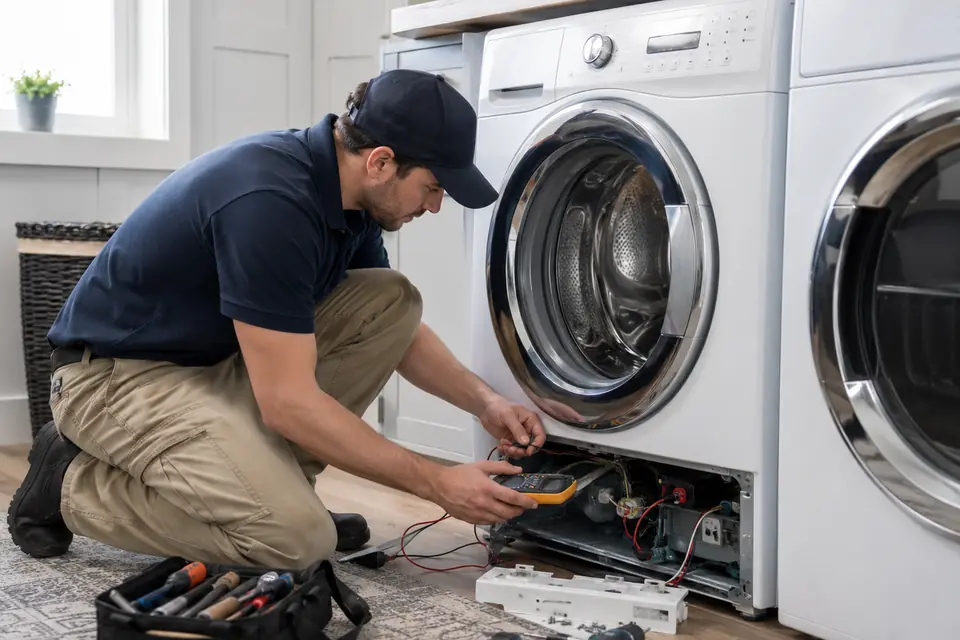
Straightforward residential appliance repair built around diagnosis first, clear options and practical recommendations.
The fastest repair is not always the first part replaced. Start with the symptom, narrow the likely cause, confirm what is actually failing and then decide whether repair is practical.
The model, symptom, error code, operating history, utility condition and access determine the repair path. Parts should follow diagnosis—not replace it.
Repair may be appropriate for no-start, poor heating or cooling, draining, leaking, noise and control problems after safety, condition, parts and overall value are considered.
A repair visit should establish the problem, explain the available path and verify only the work that was authorized and completed.
Review the model, symptom, error codes, operating history and what changed before the failure.
Narrow likely electrical, mechanical, water, airflow or control causes through appropriate accessible checks.
Explain the finding and complete the approved repair or adjustment when parts, condition and scope allow.
Run an operational check and describe what is fixed, what remains uncertain and what follow-up may be required.
The final conversation should distinguish a confirmed improvement from an intermittent condition, unrelated fault or future risk.
Repeat the relevant operating cycle or function where practical.
Review disturbed or repaired connections and final appliance placement.
Explain the observed result in plain language without overstating certainty.
Identify parts, monitoring or additional work still recommended.
Send the appliance type, brand/model, exact symptom, error code, photos, location and preferred timing.