Listen
Collect the appliance type, brand/model, symptom, error code, timing and any change that happened before the problem.

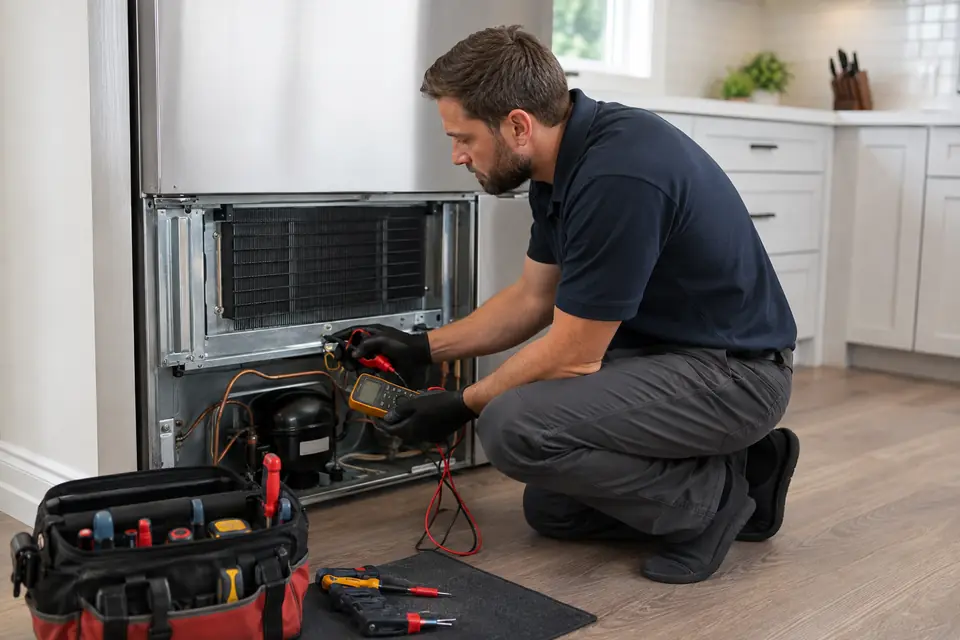
Find the cause before replacing parts. Practical troubleshooting that turns symptoms into a clear repair or replacement decision.
Diagnostics reduces guesswork. Symptoms, error codes, electrical checks, mechanical inspection, and operational testing are used to narrow down the actual cause of a problem.
Appliance type, model, exact symptom, error code, timing, utility conditions and safe access help narrow the diagnostic path before a visit or parts discussion.
Diagnostics is the right starting point when the appliance behaves unpredictably, displays an unfamiliar code or has not yet been tied to a confirmed component or connection.
The objective is to move from the reported symptom to the most supportable next step without pretending uncertainty has disappeared.
Collect the appliance type, brand/model, symptom, error code, timing and any change that happened before the problem.
Attempt to reproduce or observe the condition and review accessible electrical, mechanical, water, airflow or control factors.
Explain the finding and complete only the diagnostic or other work authorized for the visit.
Run an appropriate operational check and state what is confirmed, unresolved or dependent on parts or further work.
A diagnostic visit should separate observations from assumptions and make the decision to repair, monitor or replace easier.
Record the reported symptom and whether it could be reproduced.
Review accessible utility connections, placement and relevant operating conditions.
Explain the observed condition and the limits of the completed testing.
Identify any recommended part, follow-up work or replacement decision without guaranteeing the outcome.
Send the appliance type, brand/model, exact symptom, error code, photos, location and preferred timing.