Scope
Confirm endpoints, route, distance, strand count, media, connector, enclosure, polarity and available optics information.
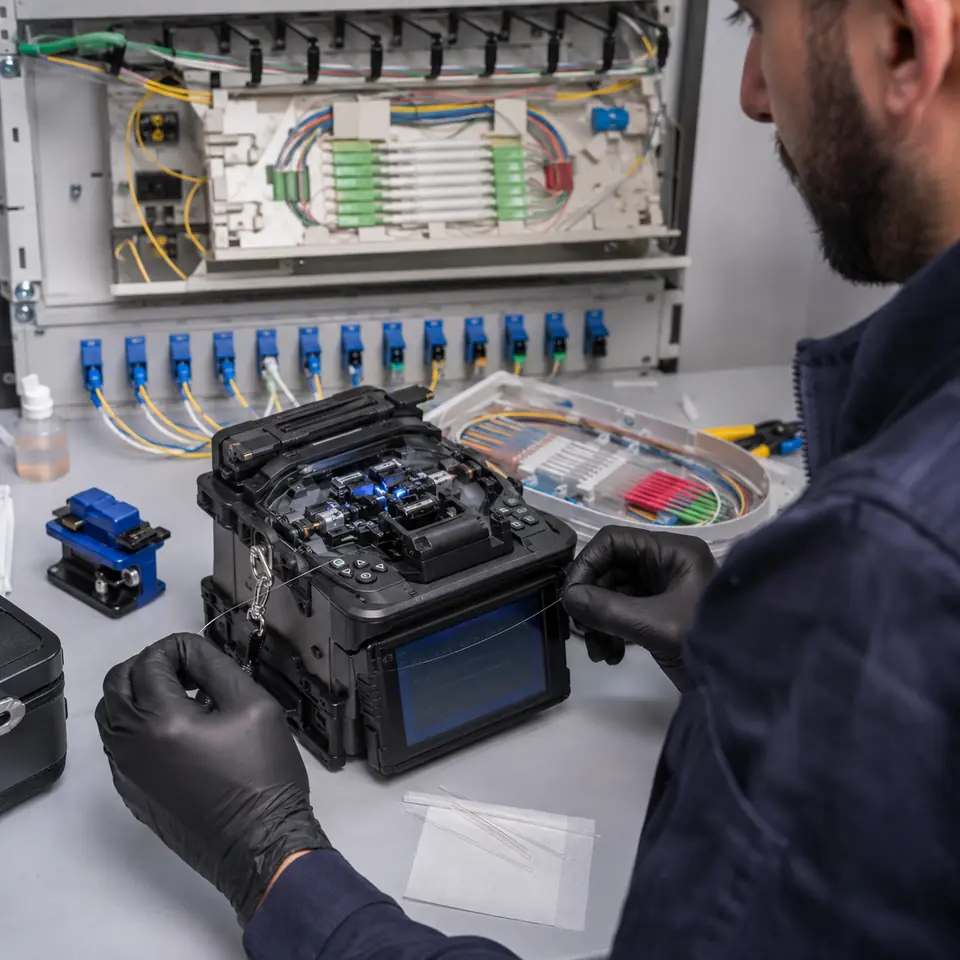
Single-mode and multimode fiber installation, fusion splicing, termination and OTDR testing for 10G-ready backbones, risers and building-to-building links.
Fiber earns its place where distance, bandwidth, future capacity or electrical noise make copper the wrong tool. FOXAI treats pathways, bend control, splicing, enclosures, optics and test evidence as one backbone—not just a link light.
Route length, strand count, single-mode or multimode media, connector type, enclosure, optics, loss budget and acceptance method should be defined before installation.
MDF-to-IDF backbones, risers, campus links, equipment interconnects and remediation projects benefit from fiber when the optical design and handoff evidence are clear.
Fiber quality depends on route protection, bend control, end-face care, splice quality, polarity and test method—not simply whether a link light appears.
Confirm endpoints, route, distance, strand count, media, connector, enclosure, polarity and available optics information.
Define pulling protection, slack storage, splice/termination method, labeling, loss testing and OTDR requirements where specified.
Install and dress cable, build enclosures, complete approved splices or terminations, and protect end faces.
Inspect/clean where applicable, test to the agreed method and identify failed, high-loss or inaccessible strands.
The closeout should connect every strand identifier to its endpoint and result, with exceptions separated from accepted links.
Confirm polarity and optical continuity for each approved strand.
Match enclosure, tray, port, strand and far-end labels.
Provide agreed loss readings, OTDR traces or strand records when included.
Document damaged media, abnormal events, unavailable far ends or optics outside scope.
Send endpoint locations, distance, strand count, media/connector requirements, existing test results, drawings and the acceptance evidence required.
Fiber provides the high-capacity backbone, while enclosure records, strand labels, optical testing and active-equipment responsibility make that backbone supportable.