Scope
Identify protected areas, openings, occupancy patterns, entry/exit routes, existing devices and the desired response.

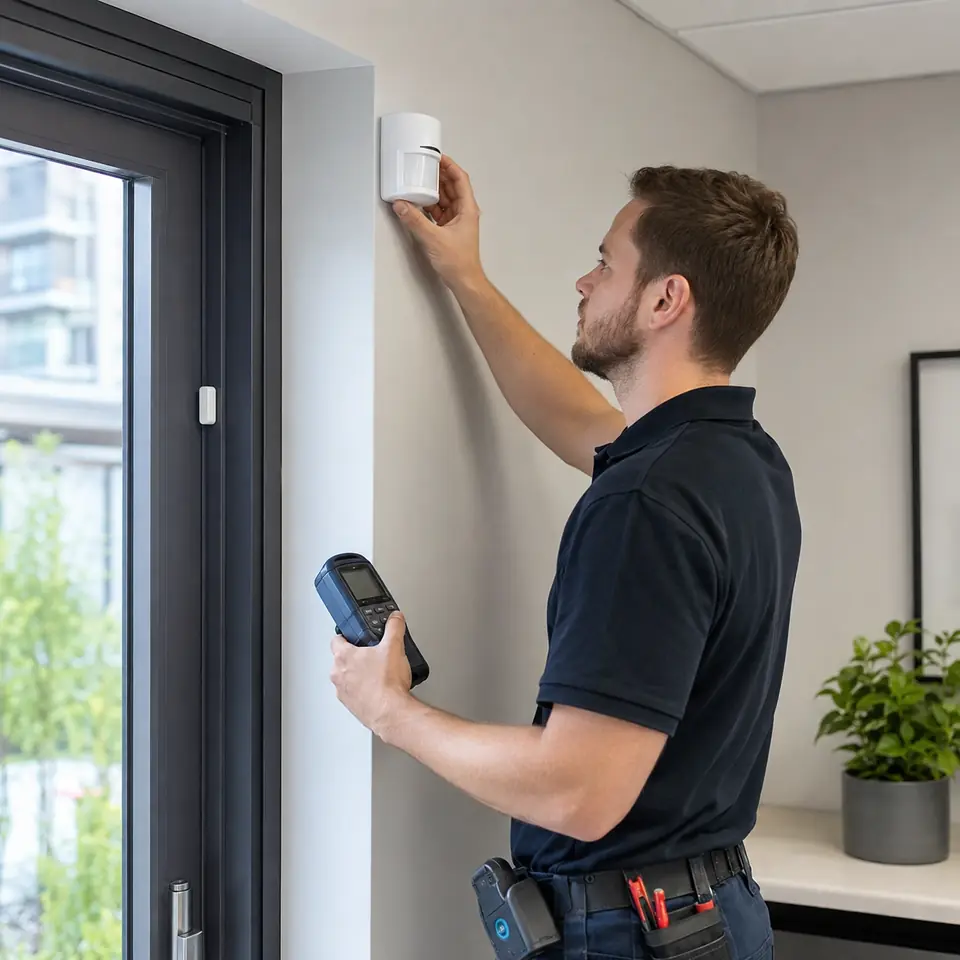
Intrusion alarm infrastructure built around clear device placement, dependable wiring and clean integration of contacts, motion detection and control equipment.
Intrusion detection uses sensors and control equipment to identify unauthorized entry. Correct device placement and dependable wiring are essential for useful detection and reduced false alarms.
Protected openings, occupancy, device type, zone strategy, panel capacity, backup power, cabling and monitoring responsibility should be reviewed before devices are placed.
Retail, offices, warehouses, storage areas and residences need different perimeter, interior and after-hours strategies. Device placement should follow the operating pattern.
Reliable detection depends on the relationship between devices, zones, entry/exit behaviour, panel power and the party responsible for monitoring or programming.
Identify protected areas, openings, occupancy patterns, entry/exit routes, existing devices and the desired response.
Plan contacts, motion devices, panel zones, sirens, cabling, power and interfaces with monitoring or other security systems.
Install and label approved devices and field wiring while keeping panel terminations serviceable.
Test each zone, tamper/restore behaviour, audible devices and any approved handoff to programming or monitoring.
The closeout should make zone identity and test status clear without implying monitoring or response services that are outside the proposal.
Trigger and restore each approved contact or detector.
Match device, cable and panel-zone identifiers.
Record tested zones and the party responsible for final programming or monitoring.
Flag unavailable panel access, failed existing devices, power issues or interfaces outside scope.
Send a floor plan or photos, opening count, existing panel/device details, occupancy pattern and monitoring responsibility if known.
Intrusion work is scoped as a detection and field-wiring layer; monitoring, dispatch, life-safety and third-party platform responsibilities remain explicit.